Moving repetitively through the water is the perfect medicine for attention struggles and hyperactivity
Let’s begin with a disclaimer – I am not a medical professional, and I reflect on this topic purely from a personal perspective, as an ADHD individual who has also taught dozens of children with the same condition.
I discovered my passion for swimming later on in life. It had always been there in the background, as a hobby, but it wasn’t until I took my own son to baby swimming that I realised I wanted to love the water from a professional perspective. Six years on, swimming is now a huge part of my life. Having transitioned from a desk-based career to one where I teach sport, not only do I see every day the immense benefits swimming has on the children I teach (with or without ADHD), but I have also come to the realisation, decades late, that it actually also has an immense effect on my own neurodevelopment condition in a positive way. Both as a swimmer and as a swim teacher, I notice how different I feel leaving the pool after a swim or a shift. For me, being in and around water is my ADHD medication – it gives my condition what it is always seeking, in so many ways.
Good brain training
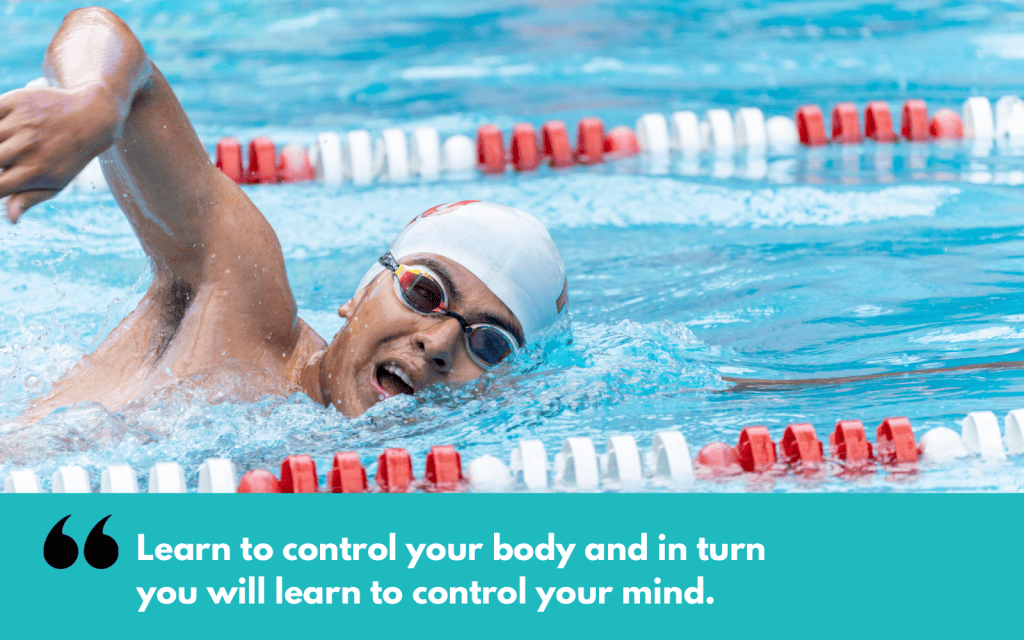
ADHD, attention deficit hyperactivity disorder, is a condition that affects focus. Individuals with ADHD may struggle to stay still and concentrate in certain environments where these characteristics are demanded, like in school, work or in social settings. Swimming provides individuals with ADHD the chance to practise focus, through the meditative process of concentrating on their repeated physical movements. The structure of it as a sport in fact – the lanes, the timings, the drills – can give a feeling of security to a chaotic brain. If you give selective attention the chance to swim, not only will it begin to be moulded in the practice to organise itself, but as a structured hobby with training plans, objectives, timings, direction, accountability and more, swimming can teach memory retention, impulse control, endurance, consistency, routine, repetition, showing up when life feels hard… things that people with ADHD notoriously struggle with. Learn to control your body and in turn you will learn to control your mind.
The joy of multi-tasking
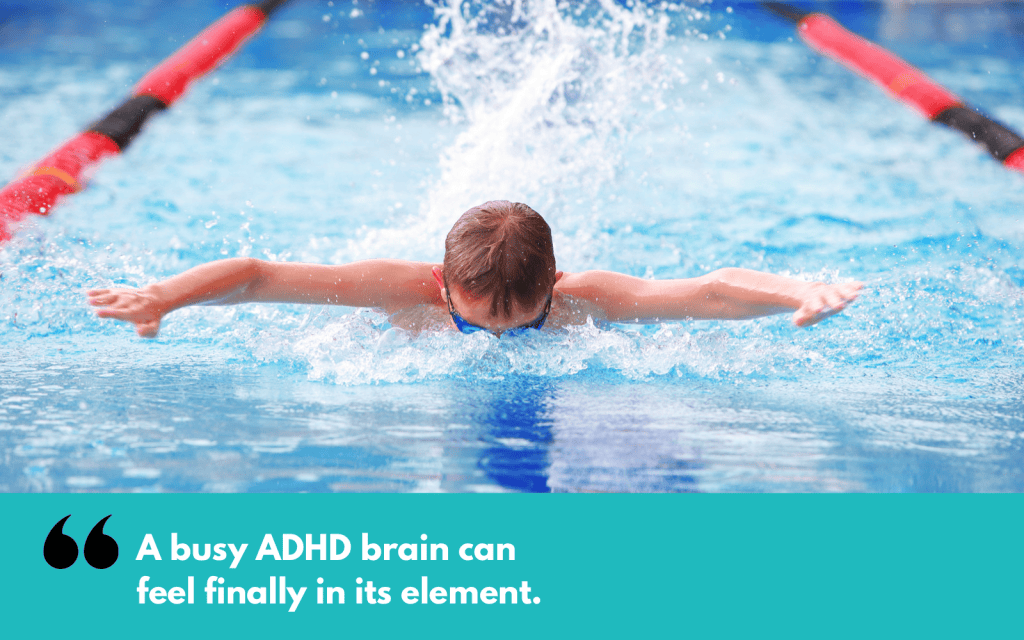
Because inattention is the brain’s ‘desire’ to focus on lots of different things at the same time, swimming gives it that opportunity. It provides constant feedback for a brain that never stops – a swimmer has to balance, co-ordinate and move in particular ways, at the same time. You navigate cause and effect and productivity in real-time (your kick moves you forward, a tilt helps you change direction). You have to master three different rhythms and techniques simultaneously. Your brain is flip-flopping from one task to another, and back again – ticking through what you’re focusing on, which side you’re breathing to, what time you’re aiming for, which number length you’re on and so much more. Feel like you can’t switch your ADHD brain off? Come swimming, to a place where it doesn’t have to! Whilst swimming, a busy ADHD brain can feel finally in its element.
Sensory seekers
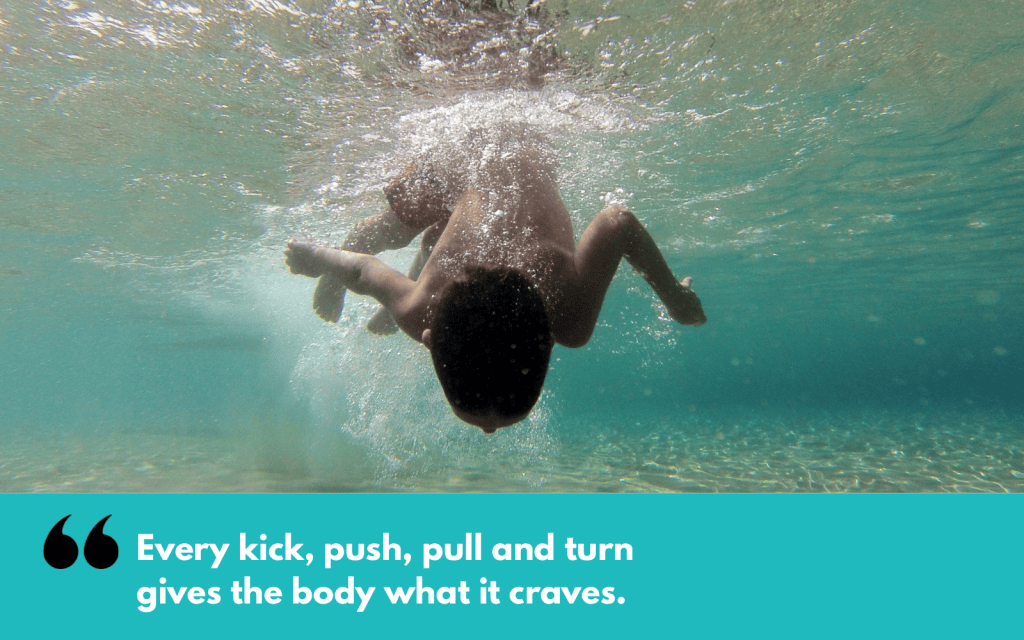
Swimming is a whole-body sensory experience – you can feel the water against your skin, process the temperature, hear the sound of splashing, rejoice in resistance pushing against your entire body as you move through it. I can’t think of any other sport that offers this constant level of sensory input. For ADHD sensory-seekers, every kick, push, pull and turn gives the body what it craves. It’s a full-body learning experience which keeps ADHD children not just regulated and happy, but engaged on a completely different level, perhaps a refreshing opposite to how it felt to sit at a desk all day.
An immersive world
The reason why neurodivergent swimmers are often always going underwater (they’re not just ‘not listening’) is because it’s a calming sensory escape. Head underwater, swimmers are free from loud noise or conversations, visual stimuli around them, and even get to avoid the physical sensation of standing on earth. There is less gravity in water and we are given the weightless sensation of flying or floating – again, no other sport offers that kind of sensory escape. In that moment underwater, there are no screens, no faces, no distractions. There are no rules, no requests, no demands. No expectations, just you and the water. It’s an incredibly liberating feeling for neurodivergent individuals who struggle daily with the feeling that the world around them wasn’t designed for their needs.
Giving hyperactivity a purpose
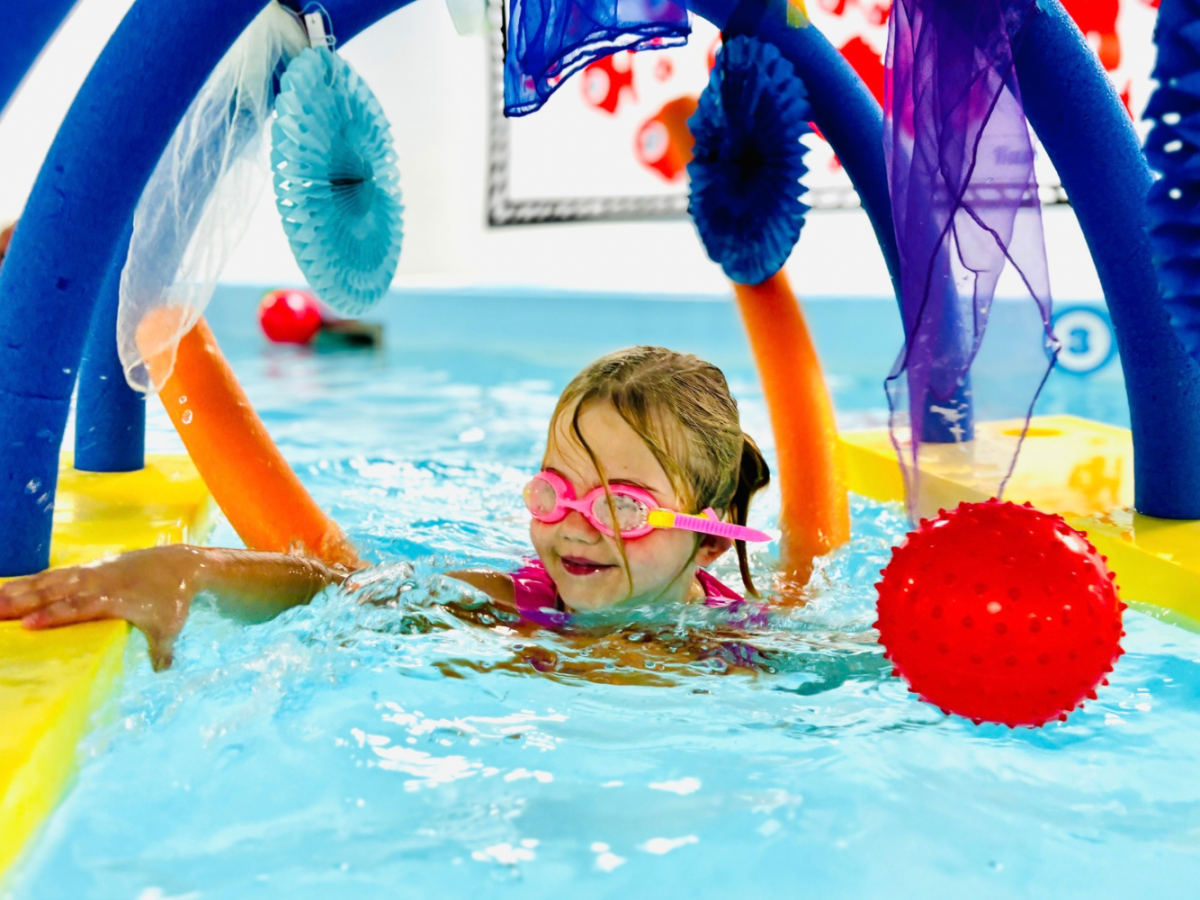
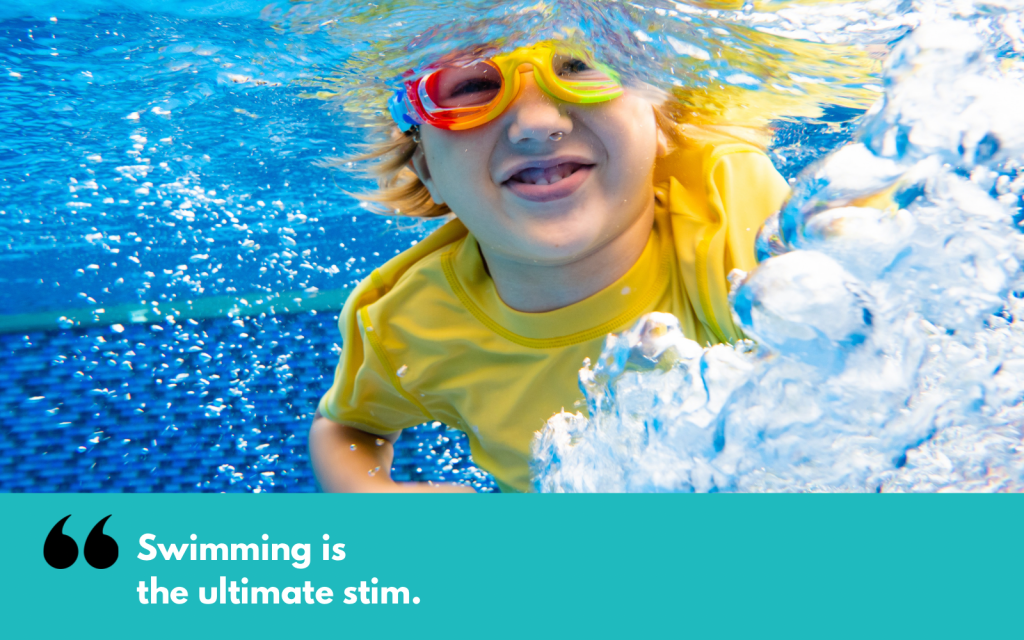
In swimming, hyperactivity isn’t a distraction from an activity, it is the activity. A child with hyperactivity might have been instructed to manage their energy-use all day – been told to sit still, to stop fidgeting, tapping, pushing, pulling. Swimming is the ultimate stim – jump, move, kick, bounce, turn, roll, twist, splash, wriggle. They can do whatever they need to do and the water will support them. They can be impulsive, another major symptom of ADHD – jump in, dive under, change direction, move in a new way. If I start my day in the pool it gives me a chance to get my ADHD ‘out of my system’ and sets me up for a day of concentrating.
Positive mental wellbeing
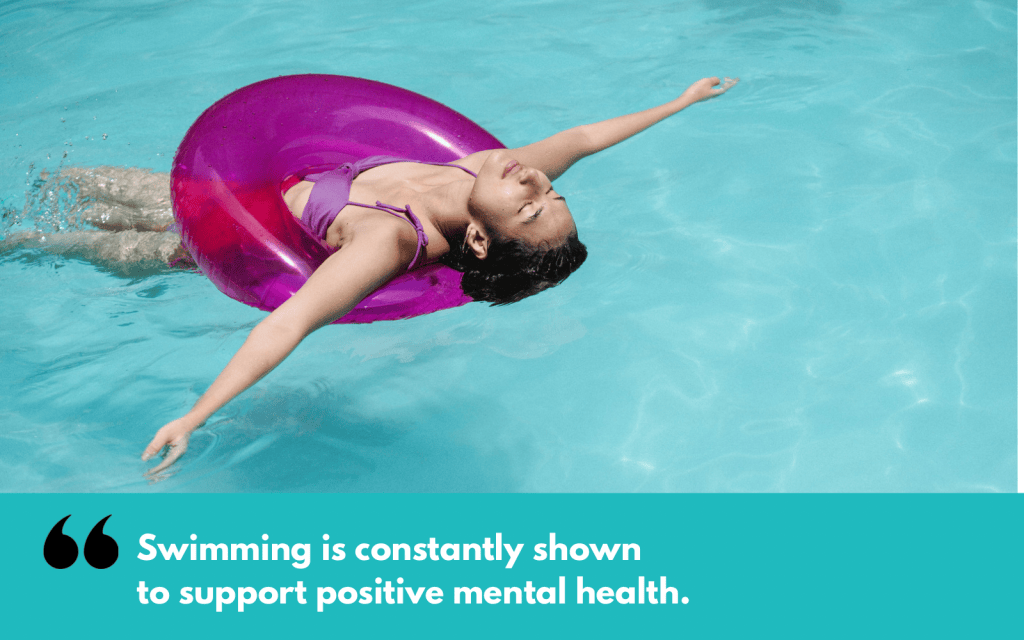
According to the NHS, people with ADHD are more likely to have mental health issues such as anxiety or depression. Swimming is widely recognised as supporting positive mental health through its natural ability to calm and create endorphins. The rhythm of the movements regulate the nervous system, the glimmer of light reflecting on a the surface, the satisfying sound of trickling all around, the deep pressure of water massaging your body and – there’s a reason why, as humans, we gravitate to spa days, pool holidays and seaside resorts when we are given a respite from the day-to-day. We have always been drawn to the water for wellness. As a form of physical movement, swimming is also highly repetitive (in comparison to, say, playing a game of football) – for me, this gives a hugely meditative effect and is a welcome alternative to more ‘still’ forms of wellness like meditation and yoga (which I find too difficult to sit still in!).
The ultimate buzz
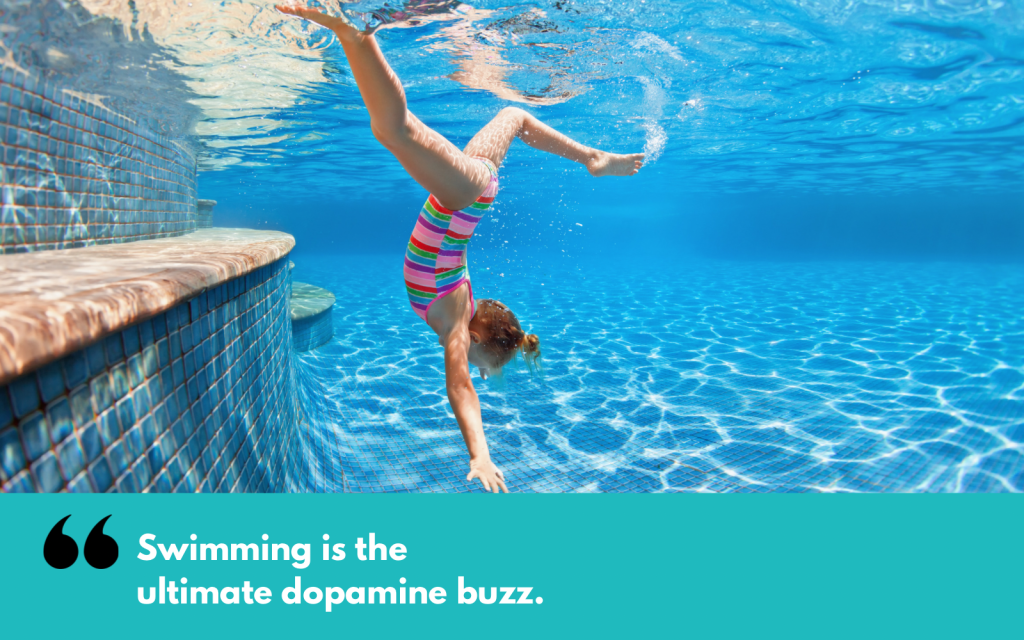
Speaking of brain chemistry, physical exercise naturally increases dopamine and norepinephrine levels, which are the exact brain chemicals targeted by many ADHD medications. There is a strong relationship between individuals with ADHD and being drawn to things with a ‘high-dopamine hit’, often regularly searching for spontaneity, motivation and stimulation. This is why, for some children, this can manifest in them doing things that are unsafe. Give an ADHD child the chance to learn diving techniques, try different water slides, reach the bottom of the deep end, race as fast as they can across the pool and splash you as they spin 360 degrees to jump in – the part of their brain that leans towards risk will be satisfied. For me, swimming is the ultimate dopamine buzz. If you teach ADHD children in the pool, support their need for immediate reward by allowing them be your helpers, assist with equipment, demonstrate the skill, swim first, race against timers and achieve mini challenges. Don’t forget the well-dones, thumbs up, fist pumps and high fives.
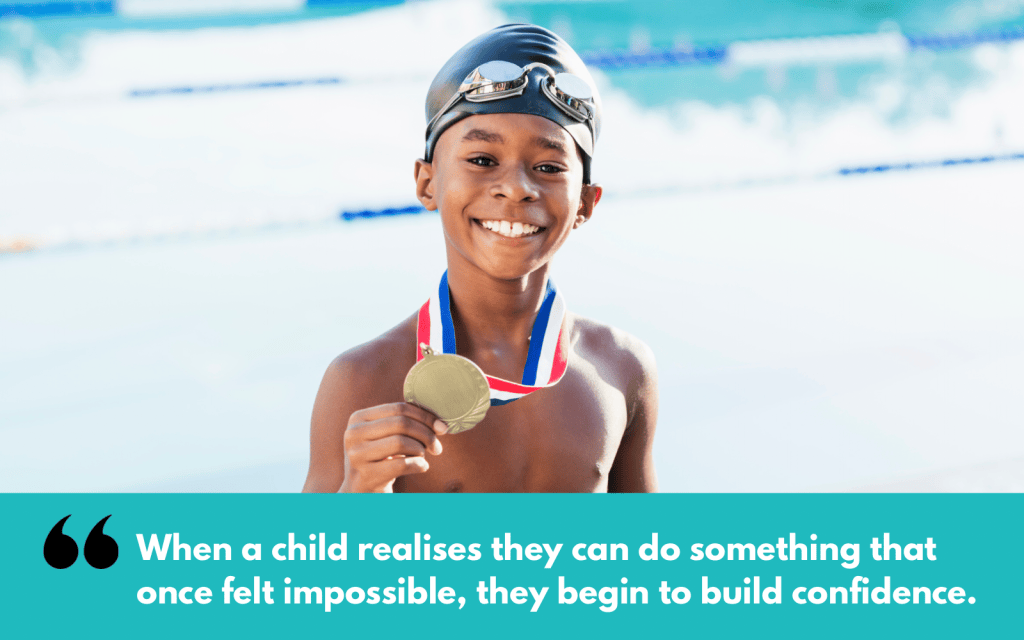
Confident swimmers, confident kids
Children with neurodivergent needs can sometimes receive negative feedback in everyday life, more so than their neurotypical peers. They might be told they aren’t listening properly, that they’re too energetic or that they need to try harder. Over time, repeated criticism can affect how a child feels about themselves and their abilities. Many of my ADHD friends and I myself have struggled throughout life with anxiety, rejection sensitivity, self-belief and confidence as a result of the daily struggle to mask our condition and do the right thing.
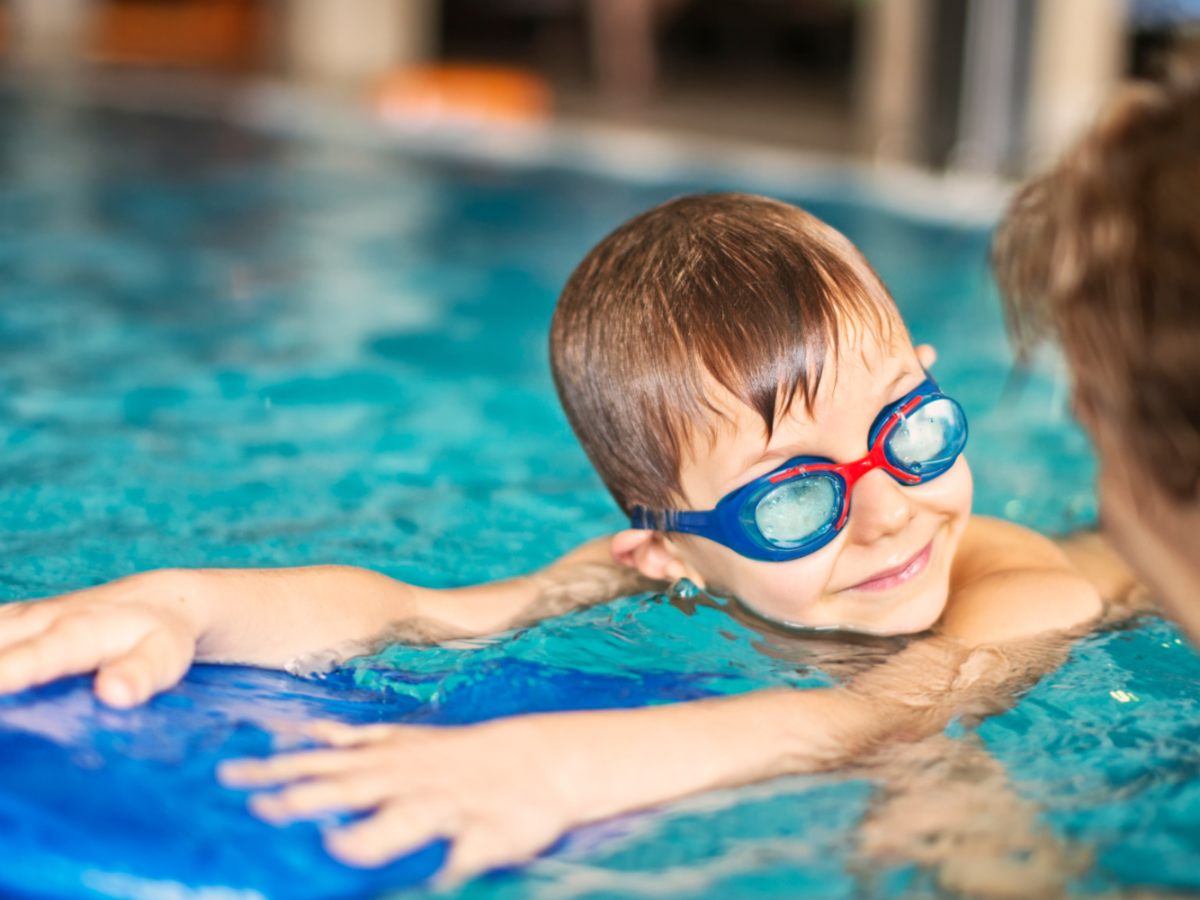
Swimming provides so many opportunities for children to experience success. It might be putting their face in the water for the first time, blowing bubbles independently, learning to float or finally coordinating their arms and legs. It might be overcoming a fear, trying again after a difficult attempt or discovering that they can swim further than they ever imagined. When a child realises they can do something that once felt impossible, they begin to build confidence in their own abilities. They learn that progress is possible, that mistakes are part of learning and that they don’t have to get everything right the first time. For a child who often feels that certain things are harder for them than for other children, that confidence-building can be life-changing.
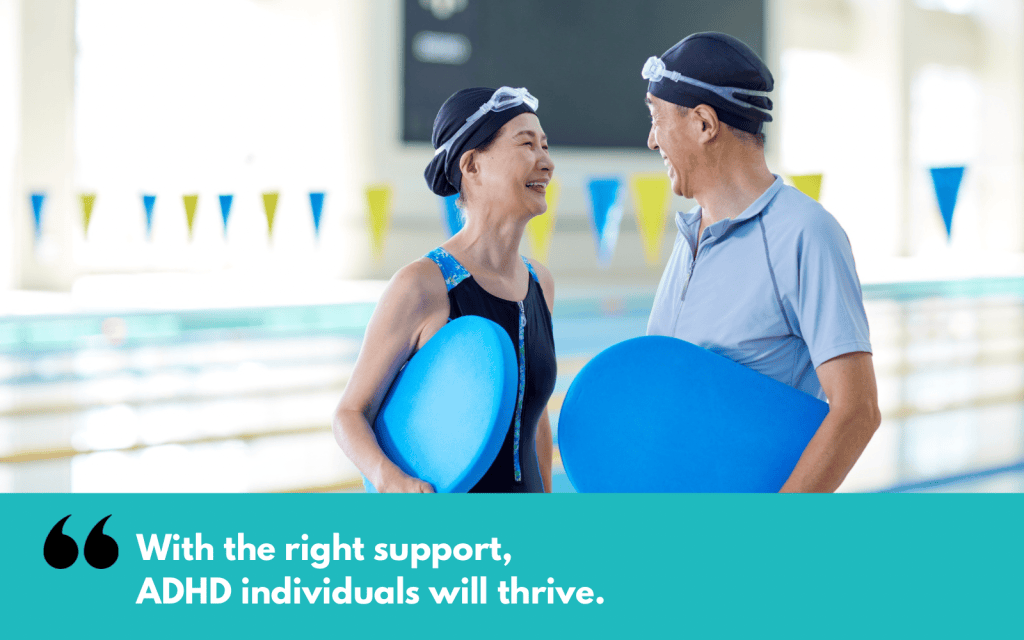
The reward of teaching
It took me a couple of decades to realise that swim teaching was the best career choice for my ADHD brain. Not only does my hyperactive energy get to move around all day, but I get to fulfil all of the things I mention in this article that support my attention deficit. The dynamic nature of teaching, a quick turnover of fresh faces every half an hour, constantly changing real-time objectives and dangers, the exciting challenge of having to juggle different teaching points, ensuring water safety, running through lesson plans and policies in my head and so much more – swim teaching requires major multi-tasking in a fast-paced environment, and with the right support, ADHD individuals will thrive as swim teachers. I actually find that after a work shift, my ADHD brain feels much calmer, having exercised the ability to shift focus so quickly for a set period of time.
My reward-seeking nature always led me to be the loud one in class, the centre of attention, the ‘show off’ and many other negative labels we have historically put upon ADHD children. Well, as a swim teacher, you get to do all of this… and get paid for it! I grab the pool noodles and aim to engage my audience well – capture their attention, project my voice, often injecting fun and ‘playing the clown’. These things I was in trouble for in the classroom are what make me an excellent teacher especially in an aquatic classroom. My desire to seek reward is also constantly kept happy – I see kids thrive, see swimming impact their lives in a huge way and it’s the best dopamine of all. Their progress is the thrill I chase. Every milestone, every smile, every moment of joy in the water is a chemical release and a win in the slot machine that is ADHD dopa-mining.
I also believe that having ADHD influences the kind of swim teacher I am. It helps me look at children differently, think creatively about how they learn and recognise that not every child will respond to the same teaching methods. Spontaneity means I can adapt my teaching in the moment, quickly realising when something isn’t working, generating ideas on the fly, being impulsive to meet needs. Outside of the water this approach can create chaos, but in a lesson it’s dynamic teaching.
Keep ADHD in the water!
If you’re reading this and your child has ADHD or symptoms of it, I hope you’re getting all the support you need. There is lots of information on the NHS website about prioritising sleep, diet and so on. But if you haven’t tried it yet, get them in the pool. Even just a fun swim with family – let them do whatever they need to do, watch their face as they go underwater for the first time, see how daily swimming can change their life.
And if your ADHD child is brilliant at swimming, keep it in their life. If they have reached Swim England Stage 10, look into diving, water polo, coaching squads – keep it up. They’ve found something they are good at that boosts their confidence, self-esteem and so much more – don’t stop now. A regular commitment to their most-loved sport could set them up for lifelong success.
For me, living with a neurodevelopment condition for four decades has had a major impact at times on work, friendships and mental health. But through the tough times, the water has always been there for me, always let me be myself. Since becoming a swim teacher, I receive such regular benefits that I now can’t imagine ever not being in the pool each day. Swimming will always be my job, hobby, my medicine, my best friend.
I realise now that as an ADHD individual, I am just like the water, I don’t have to quieten my waves. Just like the water, I am inconsistent, impulsive and free. Just like the water, I don’t have to change.
Photos: Canva