Weekly swimming builds a child’s confidence, resilience, self-belief and so much more
For my own son, swimming has always been the non-negotiable afterschool club. With 9 water related deaths happening just this week, we are reminded that it is imperative that children, (and adults) know what to do when they are in and around water.
In addition to being an important life skill, swimming is also proven to be one of the best activities for all ages – it’s great for muscles, joints, respiratory health, cardio, endurance and mental wellbeing. But aside from all of the obvious physical and water safety benefits, for children especially, swimming can mean so much more.
Having witnessed my 7 year old conquer Warwickshire’s muddy Wolf Run this month, I have been thinking a great deal about the less obvious life lessons that children take away from physical activity. Structured swimming classes especially, offer so much opportunity for personal, mental and emotional growth.
So, here they are – 10 things your child will get out of their weekly swimming lesson that you may not have originally thought about.
Commitment and dedication
The act of encouraging your child to turn up to their swimming lesson each week builds good habits – commitment to their hobbies and interests, settling into a consistent exercise pattern and growing a dedication to something. You’re ensuring they build a positive relationship with health and wellness, but also setting them up to – across other areas of their life, too – commit, persevere and ultimately succeed.
Social growth
For many children, swimming lessons often push them outside of their social comfort zones. It brings a brand new adult into their life to coach them and encourage them to grow – seeing that relationship develop can be a special thing.
Not to mention experiencing different teachers when their regular teacher is off, interacting with other members of staff on-site, taking turns with other swimmers, working together as part of fun aquatic games, taking part in something where their parent may watch from a distance – there are so many elements of a swimming lesson that help children build social confidence.
Overcoming challenges
Swimming is very multi-layered – “blow bubbles”, “breathe to the side”, “kick from the hip” – there is so much to every stroke and none of it is mastered quickly. I have just watched my son perfect his breaststroke foot position across several months and the look on his face the week he finally got it was priceless. Swimming is about finally learning to do something you couldn’t do before. The feeling that leaves children with lasts a lifetime as they take this approach into other areas of their lives.
Building focus
Complex strokes require super concentration. In a busy world of noisy messaging and fast-paced schedules, swimming lessons give children a set-time to place their attention on just one specific task.
Last week, I spent 20 minutes with one swimmer on mastering an unaided push and glide on his back. It wasn’t just about the push and glide, it was about him developing the self-encouragement to succeed through unwavering focus and repeated hard work.
Navigating comprehensible goals
Children today are living in an information-heavy, objective-driven world and spend the majority of their school week working towards those all important and intricate curriculum targets. One of the things I love about teaching swimming is that, despite final strokes being complex, the individual elements we teach in lessons are simple and, if age-appropriate, are very digestible and tangible exercises for children to attempt and achieve. They regularly get to experience reaching non-abstract goals that they truly understand and this builds confidence. They may have learnt the first set of split digraphs in phonics that day but conquering that surface dive to find the treasure felt real, physical and super fun!
Non-instant reward
A child’s journey through the swimming stages doesn’t happen overnight – those swimming badges and certificates don’t arrive straight away. It takes weeks of practise, months of trying, years of showing up. In a world of instant notifications and quick results, a pathway through the Swim England Learn to Swim framework (stages 1-10) allows participants to develop an intrinsic sense of accomplishment, to keep going, never give up and in time, of course, be congratulated.
Building resilience
Feeling nervous, not understanding, getting it wrong, finding it hard, not wanting to go, getting upset – these are all puzzle pieces in the jigsaw that is learning (and a normal part of being a child, too).
It can be difficult to witness these things from the side as a parent (I have been there before myself) but as a teacher we see beyond those challenging moments – we see learning, growth, development and a healthy amount of resilience building.
Realising individual impact
Squad swimming, water polo, artistic swimming, junior lifeguarding… all group lessons where you work together with others. Swimming along a lane by yourself to perfect your own stroke is arguably a less social endeavour. Yet I believe that the ongoing boosts I see in swimmers’ personal confidence is because the self-focused nature of swimming builds self-belief.
If your team wins the football match, that sense of pride is shared, but if you master something in swimming that you have worked hard on over time, there is a very heightened sense of self-accomplishment. The teacher coached you, yes, but YOU did it. With your mind, your body, your effort.
Sensory regulation
With its high-pressure, trickling sounds, calming colour and ability to make us feel weightless, it’s no wonder that water is incredibly calming for neurodivergent and neurotypical individuals. It’s the ultimate emotional and sensory regulator for children who may feel dysregulated after a long day at school. For me, it’s also an amazing sensory experience for children as the pool remains one of the last remaining sacred spaces in society that is screen-free.
For so many different reasons, swimmers, of all ages, always, always, always get out of a pool feeling better than when they got in.
Managing anxiety
It’s very normal for children to feel big emotions sometimes (and adults!). We are all navigating so much in today’s world. When life feels tough for me, I go swimming. Focusing intensely on moving the body repetitively through water is hugely meditative and these motions, along with the quiet of the underwater world, diverts the brain away from anxiety.
In 2024, 500 children every single day were referred to mental health services for anxiety (Gov.UK). It is important for children to ask for support and talk about it, of course, but also learn future coping mechanisms, learn that in tough times, they can turn to sport and movement for recovery, release and regulation. Life, at times, will be hard, but the water will always be here for them.
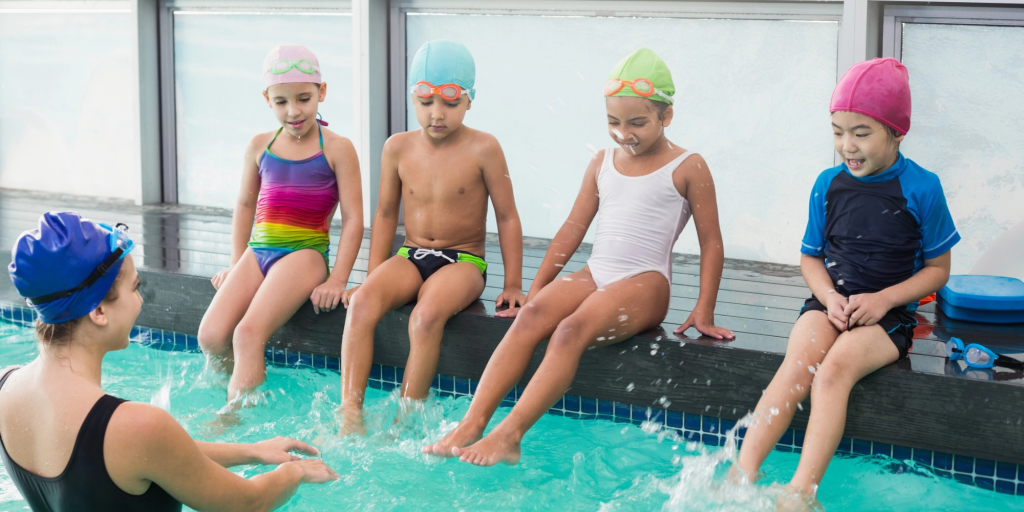
Photo: Deposit Photos